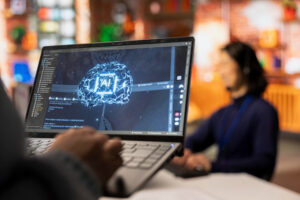
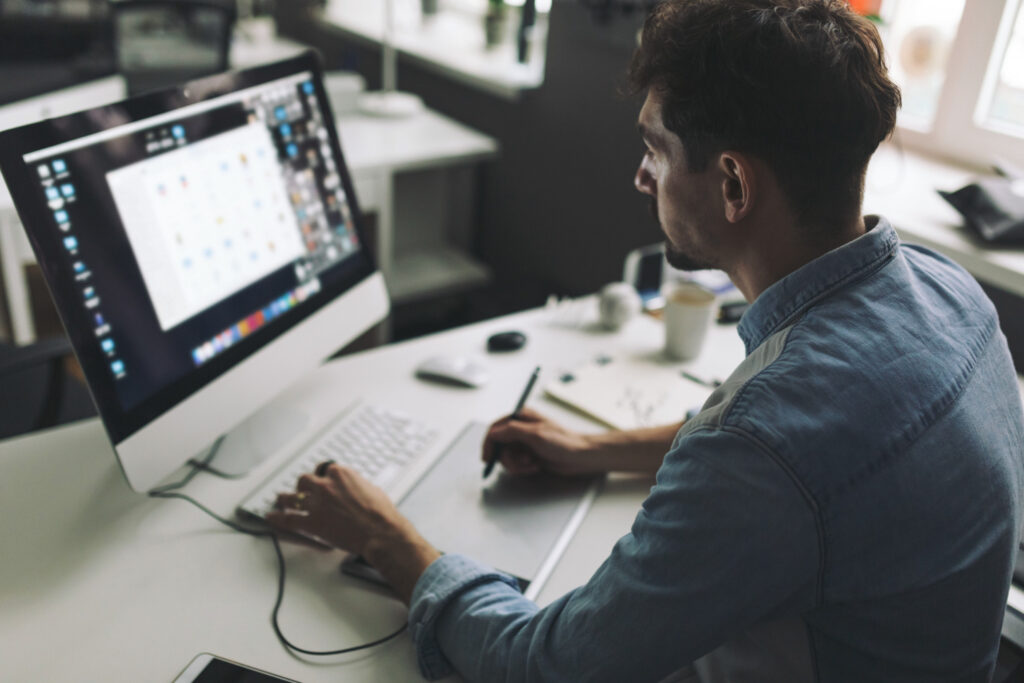
However, what exactly does AI do to a concept and render it to come? We shall discuss the way AI is transforming the landscape of design, its advantages, applications, drawbacks, and how the future might appear.
What is AI-Powered Graphic Design?
AI-powered graphic design is the application of artificial intelligence technology algorithms such as machine learning, neural networks, or generative AI, as a design aid. With AI, in contrast to traditional design tools, which require full manual input, it is able to work out the data, forecast the design tendency, and make design pieces on its own.
As an illustration, AI may provide color combinations, typography, and designs immediately, referring to the style guide of a brand. It can even create original art with the assistance of such tools as MidJourney and Adobe Firefly.The result? Designers can now work through ideas to finish images in a much less amount of time than before.
The Way AI can Improve the Creative Process
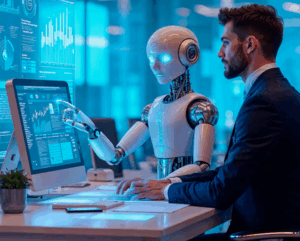
AI is not going to displace designers in graphic design, it will only make them more creative. This is the assistance that AI can provide at various phases:
Generation of Ideas- Within a few seconds, AI can create concept art and inspiration boards to provide designers with a starting point.
Design Recommendations – AI proposes fonts, colors, layouts, and designs, which are in line with current trends.
Personalization – AI will enable companies to generate unique designs to various audiences, including customized advertisements or product mockup.
Automation – Mundane operations such as image size adjustments, background removal, or design format are automated.
This workflow developed as AI-driven enables professionals to devote less time to technical work and more to creative storytelling.
AI Advantages in Graphic Design

AI-based products are quickly gaining popularity in the design industry. Here are some key benefits:
Speed and Efficiency – It can be done in minutes which would have been done in hours.
Cost-Effectiveness – It does not require big teams to provide the business with the access to professional-level designs.
Consistency – AI also makes sure that the branding elements remain consistent even over various platforms.
Experimentation – Designers are able to experiment with new styles and ideas without having to begin at the beginning.
Scalability – Ideal in case of agencies that require high volumes of content.
Creativity with the speed of AI will enable designers to provide customers with high-quality and personalized visuals at scale.
Graphic Design Tools Powered by AI
The emergence of AI has introduced some of the most potent tools that are transforming the design business:
Canva AI – Good when you need to make a fast social media design, presentation, and marketing visual.
Adobe Firefly – This is a professional level tool of creating art and polishing logo images.
Figma AI Plugins – Ideal in mockup of the UI/UX and collaborative design work.
MidJourney and DALL*E – Generative AI websites in which unique digital art can be created.
All these tools make it easier to transform the design ideas into reality and provide creators with greater flexibility.
Concepts to Reality: The Role of AI in Workflow
The conventional design has been composed of brainstorming, sketching, and revisions. This is simplified with the help of AI:
Concept Input – It is the input given by the designers in the form of text.
AI Drafts – The AI application creates several visual opportunities.
Refinement – Designers edit and customize and refine results.
Final Product – A professional smooth design that is ready to use.
This workflow is time-saving and, at the same time, it allows human creativity. It is collaborative, AI does the legwork and designers make the image and brand narration come to life.
Challenges and Limitations
Although the advantages are enormous, AI in graphic design also has issues:
Generic Outputs – The over dependence on AI can result in designs that appear repetitive.
Copyright Issues – It is unclear whether AI-generated work should be owned or not.
Skill Gap – The designers have to be ready to use new tools to remain competitive.
Ethics – It is possible to be concerned about using the AI-generated design without referencing sources.
The most optimal solution is application of AI as a supplement. Originality and emotional attachment requires human creativity.
AI in Graphic Design, The Future
In the future, AI is bound to become even more significant in design. The AI intuitive tools will become more apparent, human-AI collaboration in real-time will be possible, and there will even be AI-based branding concepts. Nonetheless, the human touch will still be crucial, story telling, emotional appeal and cultural sensitivity cannot be automated completely.
Designers who consider AI as a creative partner are the ones that have the future. The possibilities are limitless by integrating the imagination of people with the efficiency of the AI.
FAQs on AI-Powered Graphic Design
Will graphic designers be eliminated by AI?
No. AI is a kind of tool, which assists designers with accelerating the process and providing ideas, but human creativity and storytelling cannot be replaced.
What are the AI-driven graphic design tools?
Some of the most popular ones are Canva AI, Adobe Firefly, MidJourney, DALL*E, and Figma AI plugins. They have features that suit various design purposes.
Is design generated by AI original?
The algorithms and data form the basis of AI designs. Although they may appear unique, their originality is often derived in the way human design makes them unique and applies them.
What are the advantages of AI in design to small businesses?
AI offers cheap professional-level graphics that allow small businesses to compete with more established brands without requiring huge design teams.
What are the skills that designers need to acquire with AI?
Designers are to pay attention to storytelling, brand strategy, and creativity- the spheres, which require human judgment and emotional intelligence.
Conclusion
AI by graphic design is not only a trend, it is a revolution of a visual representation of an idea. With the ability to brainstorm ideas to create the finished design, AI can also save time in workflows, decrease the expenses, and introduce new creative opportunities. The future of design is through human imagination and AI innovation working together although there are challenges.